
Thailand Rental Market Trends 2026: Renting vs Buying & Why Hua Hin Is a Smart Investment Choice
Key Summary:
As rental demand rises across Thailand’s lifestyle destinations, investors are watching Thailand’s rental market trends in 2026 to decide whether renting or buying offers stronger returns. The Hua Hin property market stands out for lower entry prices, steady demand, and growing foreign buyer interest.

Should you buy or rent in Thailand this 2026? And if you’re buying, which locations offer the best investment returns?
Digital nomads need apartments, and retirees seek comfortable long-term rentals. Both these groups are driving demand in Thailand’s lifestyle cities, so let’s take a closer look at Thailand’s rental market trends in 2026.
What Investors Need to Know
Long-term rental demand is climbing, driven by digital nomads and retirees seeking affordable living. Tourism has stabilized, making short-term rental income more predictable. More buyers are looking beyond Bangkok, drawn to beach access and a slower pace.
Supply is tightening in resort areas as developers focus on quality over quantity. The mid-term rental segment (one to six months) is growing, gaining interest among remote workers.
Renting vs. Buying Property in Thailand in 2026
The decision between renting vs. buying property in Thailand depends on your timeline.
When Renting Works: You’re staying under two years or testing an area before committing.
When Buying Works: For long-term stays or generating rental income. Over time, you benefit from capital appreciation while building equity.
5-Year Comparison: Renting vs. Buying Property in Thailand
| Factor | Renting | Buying |
| Monthly cost | ฿20,000–25,000 | ฿15,000–20,000* |
| 5-year outflow | ฿1.2–1.5M | ฿900K–1.2M + equity |
| Rental yield | None | 5–7% annually |
| Appreciation | None | 3–7% per year |
Sources: Bamboo Routes, Dot Property, Minerva Thailand. *Note: Based on Thai national mortgage rates of 4.27–6.25% (source: Bangkok Bank). Foreign buyers typically purchase in cash or face higher borrowing rates. Individual figures will vary depending on location, loan terms, and buyer profile.
The main difference between renting and buying is rental yield. This is where secondary markets like Hua Hin become compelling, offering lower entry prices than Bangkok or Phuket while maintaining strong rental demand.
Tip: If you want to understand how to calculate potential returns before committing, our guide to rental yield and high-return properties in Hua Hin breaks it down in practical terms.
Hua Hin Property Market 2026: Overview
The Hua Hin property market 2026 offers steady growth without tourism-driven volatility. Property prices remain 20–30% lower per square meter than in Phuket and prime Bangkok areas.
Key reasons to invest in Hua Hin:
- 2.5-3 hours from Bangkok; It is a popular weekend destination for Thai buyers
- Strong demand from expatriates and retirees is driving year-round rentals.
- Rental yields of 5–8%, depending on location and property type ( 5–7% for condos, while well-managed beachfront properties fetch up to 8% on short-term rentals)
- Annual appreciation of 3–7% with controlled new supply
- Quality healthcare, international schools, and modern amenities
- Lower entry prices that improve ROI compared to saturated markets
Where to Buy in Hua Hin?
Beachfront & Central Hua Hin
- Locations: Market Village, Bluport Mall vicinity, Soi 94
- Yield: 5–7% gross annually
- Pros: Year-round rental demand, low vacancy rates of 4–6%, walkable to the beach and amenities
- Cons: Higher entry prices; beachfront premiums can compress yields
Khao Takiab
- Locations: Khao Takiab beachfront, Cicada Market area
- Yield: 3.5–5% gross annually
- Pros: Scenic views, established demand from lifestyle renters and retirees
- Cons: Sea-view premiums reduce cash flow; 10–15 minute drive to the town centre
Emerging Zones
- Locations: Hin Lek Fai, Thap Tai, Soi 88 corridor
- Yield: 6–7% gross annually
- Pros: Highest yields in Hua Hin, lowest entry prices, practical access to golf, schools and daily amenities, strong family and expat demand
- Cons: No beach access, car required
If you’re seeking new condos for investment in Hua Hin, Thailand, Hua Hin Supsiri offers profitable developments, among them:
1) 88 Condo Hua Hin: A low-rise development in Soi Hua Hin 88, offering panoramic sea and city views. Units range from one to two bedrooms, starting at 41 square meters, and are located only one block from the beach. The central location provides easy access to restaurants, shopping, and public transportation along Phetkasem Road.
2) My Style Hua Hin 102: Modern, stylish condo located right behind Bluport Mall, only five minutes from the beach. Choose from studio, one-bedroom, or two-bedroom units to match your investment goals. The location appeals to both short-term visitors seeking convenience and long-term tenants who value proximity to shopping and dining.
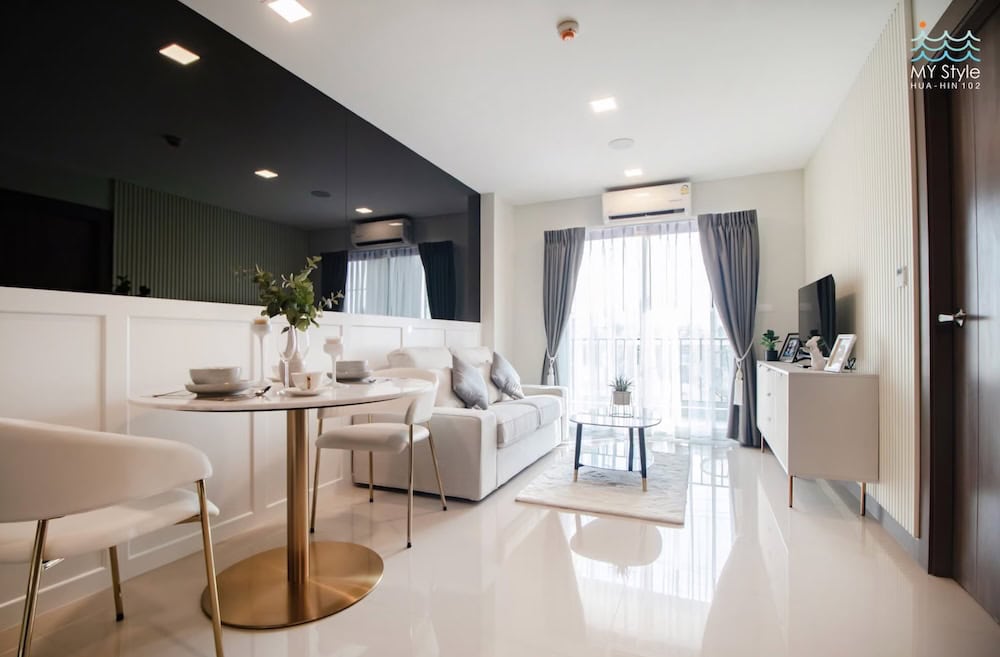
Both projects include resort-style amenities: a 30-meter swimming pool, landscaped gardens, and a fully equipped fitness center designed for ease of living.
How Hua Hin Compares to Other Thai Cities
| City | Entry Price | Characteristics | Considerations |
| Bangkok | Higher | Strong appreciation, competitive rental market | High entry cost compresses yield |
| Phuket | Premium | Tourism-driven, seasonal demand | Higher volatility |
| Pattaya | Moderate | Entertainment-driven rentals | Speculative, mixed reputation |
| Hua Hin | Lower | Lifestyle-driven, stable tenants | Balanced growth, lower risk |
Legal Basics for Buyers
- Local Thai nationals: Can purchase most property types, including land, houses, and condominiums, with access to standard mortgage financing at preferential rates.
- Foreigners: Can own freehold condominiums outright, provided the building maintains a 49% foreign ownership quota. No Thai partner or company structure required. To complete a purchase, funds must be transferred from overseas in foreign currency. Your receiving Thai bank will issue a Foreign Exchange Transaction (FET) form, which proves the funds originated abroad and is required by the Land Department for ownership registration.
For more information on legality, read our blog: Know the Real Estate Laws in Thailand Affecting Foreigners.
Extra costs to budget for: Transfer fee (2%), stamp duty (0.5%), withholding tax (depending on ownership period), and maintenance fees, which vary by project. Factor these into your ROI calculations when comparing properties.
Why Choose an Investment Property in Hua Hin?
The Hua Hin property market 2026 shows balanced growth, bolstered by lower entry prices that may improve rental yield. Hua-Hin Supsiri Property Co., Ltd. offers options for investors seeking high returns and sustainable equity growth. Get in touch with us to schedule a tour.
References:
- What is the average rental yield in Hua Hin? (2025, August). Bamboo Routes. Retrieved March 26, 2026, from https://bambooroutes.com/blogs/news/average-rental-yield-hua-hin
Frequently Asked Questions
1) Is Thailand’s rental market expected to grow in 2026?
Yes, especially in lifestyle destinations like Hua Hin, where long-term demand is rising, driven by retirees, digital nomads, and a stabilizing tourism sector.
2) Is renting or buying better financially?
For stays under two years, renting is the more practical choice. For long-term investment, buying offers 5–7% rental yield plus 3–7% annual capital appreciation.
3) Is Hua Hin a good investment in 2026?
Yes. Hua Hin offers lower entry prices than Bangkok or Phuket, stable expat and retiree demand, and rental yields of 5–8% depending on location and property type.
4) Can foreigners buy property in Thailand?
Foreigners can own freehold condominiums outright within the building’s 49% foreign ownership quota. Funds must be transferred from overseas in foreign currency, and you will need a Foreign Exchange Transaction (FET) form from your Thai bank to complete the purchase.
5) What is the average rental yield in Hua Hin?
Yields vary by location and property type. Well-managed beachfront properties can achieve 6–8% on short-term rentals, standard condos typically deliver 5–7%, and emerging zones such as West Hua Hin, Palm Hills, Black Mountain, and Khao Tao see 5–6% for pool villas and 5–7% for golf course homes.
6) Which Hua Hin area is best for investment?
It depends on your strategy. Central Hua Hin suits short-term rental investors with 85–95% peak occupancy. Khao Takiab offers a balance of views and year-round demand. Emerging inland zones like Hin Lek Fai and the Soi 88 corridor deliver the strongest long-term yields at 6–7%, while Khao Tao is positioned for long-term capital appreciation.